
Tones and Modes
Course

The Modal System of Renaissance Counterpoint
Learn to recognize the 8 Ecclesiastical Tones and the 12 Modes in Cantus Figuratus, learn which notes to cadence on according to the tone, and learn to identify the Tone or Mode in which each piece is written.
Most likely, everything you know about Modality in the Renaissance is wrong!
The 5th Tone or Mode can take on many different nuances and colours.
The 5th Ecclesiastical Tone has its final cadence on Csolfaut in Cantus Figuratus, while the 5th Psalm Tone cadences on Alamire or Elami, depending on whether it is in the Natural Keys or transposed to Bmolle.
The 5th Mode, on the other hand, cadences on Ffaut in the Natural Keys, or on BfaBmi when transposed to Bmolle.
As you can see, the 5th Tone or Mode can have its final cadence on Elami, Ffaut, Alamire, BfaBmi, or Csolfaut, depending on the circumstances.
This course is dedicated to the study of Tones and Modes.
Just as in the Renaissance, you will learn everything about Tones and Modes, becoming familiar with the 8 Ecclesiastical Tones, the 8 Psalm Tones, and the 12 Modes of Zarlino and Glareanus.
You will analyse numerous compositions, ranging from two to multiple voices, learning to analyse and identify the Tone or Mode of motets and other compositions of Renaissance polyphony.
By the end of the Tones and Modes Course, you will be able to:
Understand how the 8 Ecclesiastical Tones work.
Know which Cadences to use to remain consistent with each Tone.
Compose Fugues correctly within a given Tone.
Understand the differences between the 8 Ecclesiastical Tones, the 8 Psalm Tones, and the 12 Modes of Glareanus.
Understand how the 12 Modes work and how to create appropriate Cadences.
Use the 8 Ecclesiastical Tones and 12 Modes in both Natural and Accidental Keys.
Compose Fugues in all 12 Modes.
Transpose Modes into the Accidental Keys of Musica Ficta.
Correctly identify the Tone of Renaissance Polyphonic Motets.
Understand how each Tone or Mode evolved into different Keys during the 17th and 18th centuries.
Course Contents
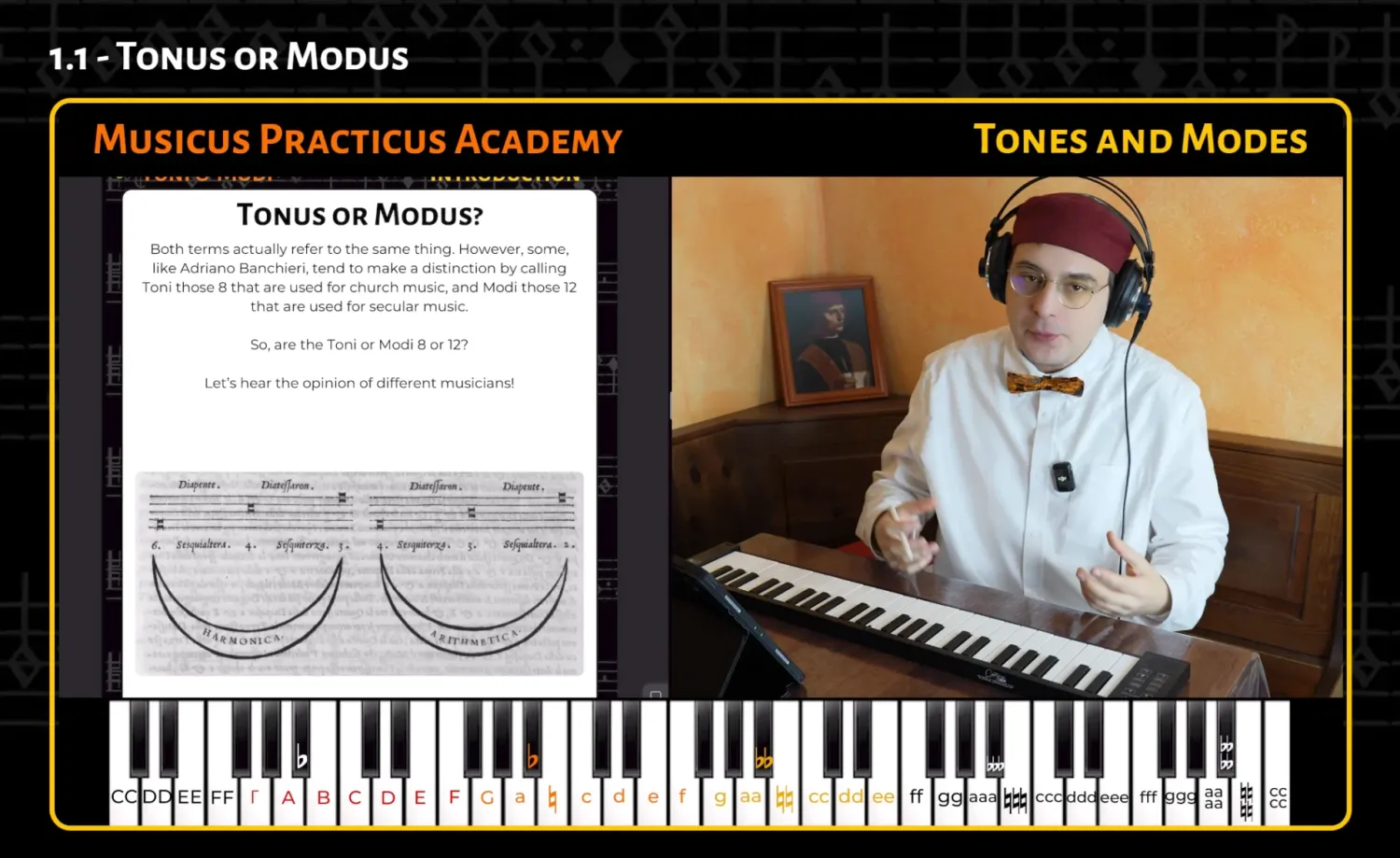
Learn the difference between Tonus and Modus.
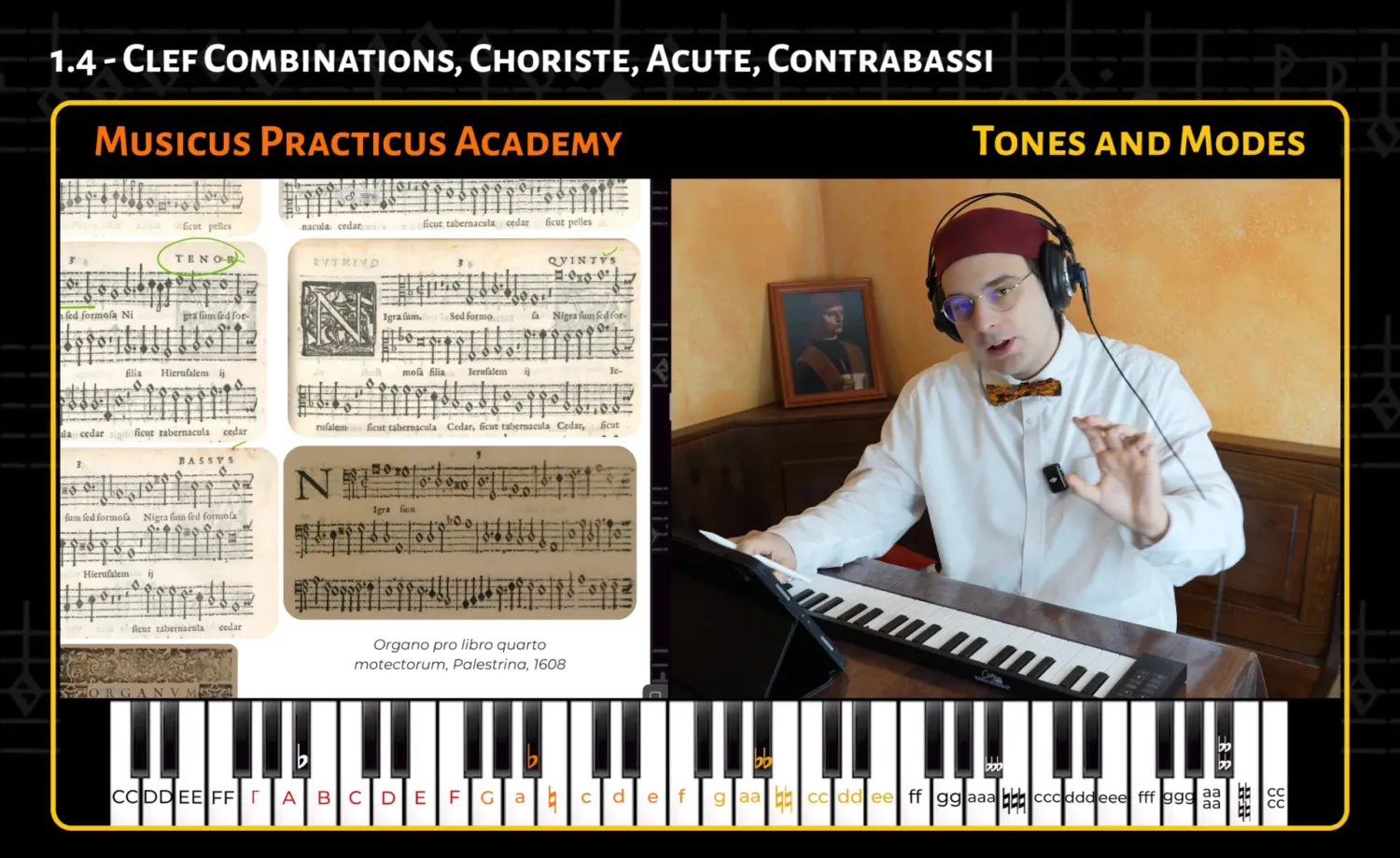
Learn to recognize pieces written in Chiavi Choriste, Acute, and Contrabassi.
Learn the mathematical construction of the Diapason in the 8 Tones and 12 Modes.
Stages
1.1 – Tonus or Modus
1.2 – Camillo Angleria the 8 Tones
1.3 – A. Banchieri Chiavi Chorsite and Chiavette
1.4 – Clef Combinations, Choriste, Acute, Contrabassi
1.5 – The 12 Modes, Glareanus and Zarlino
Learn how to transpose the Tones of Cantus Firmus to the Voci Choriste of Cantus Figuratus.
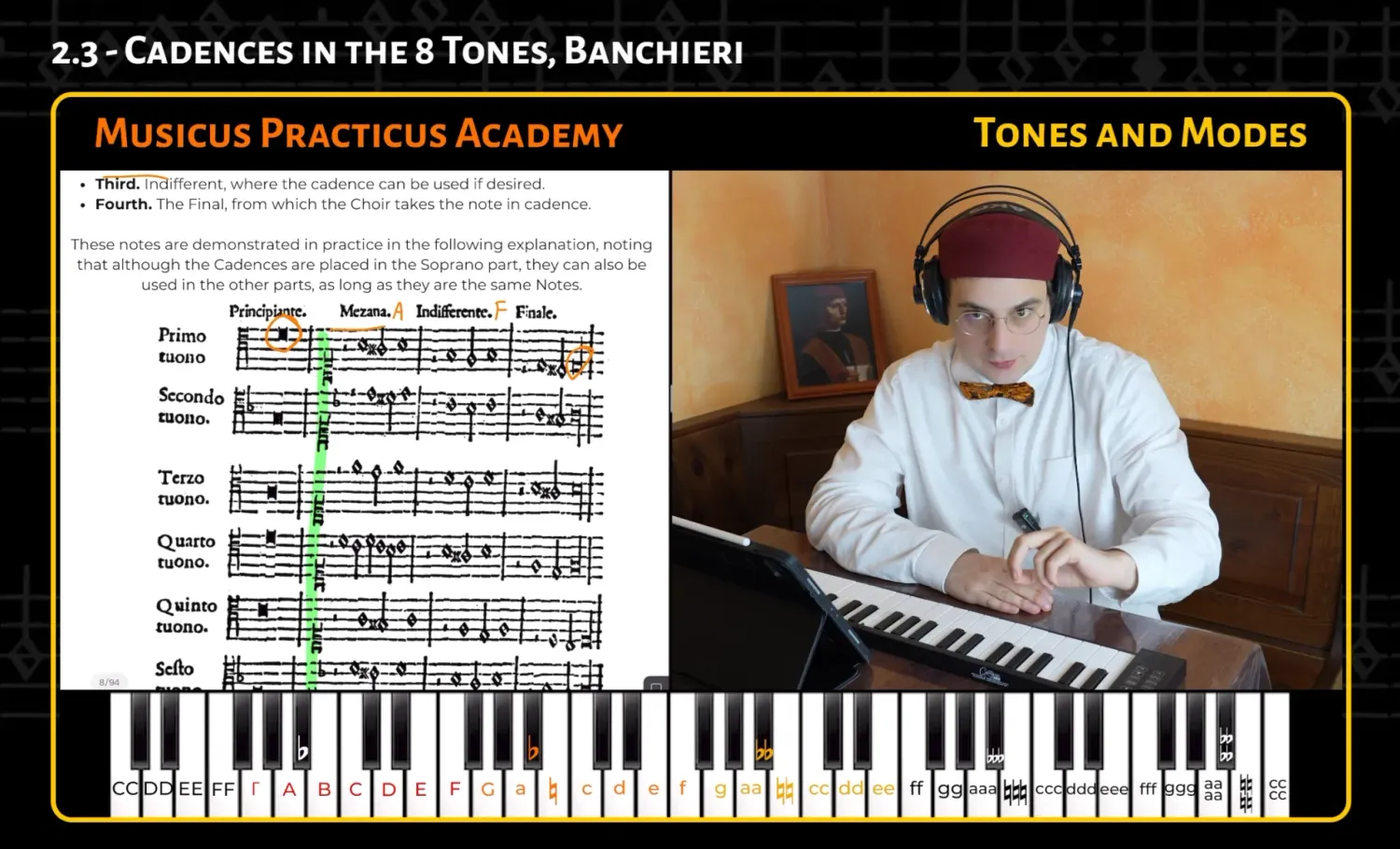
Discover how the 8 Tones of Cantus Figuratus are formed, along with their Principal and Tone-Related Cadences.
Learn how to move the voices correctly and form cadences in the 8 Psalm Tones.
Stages
2.1 – How trasposition works
2.2 – Which voice brings the Tonus
2.3 – Cadences in the 8 Tones, Banchieri
2.4 – I Tonus for Motets, Pontio and Banchieri
2.5 – I Tonus for Psalms, Pontio and Palestrina
2.6 – II Tonus for Motets, Pontio and Banchieri
2.7 – II Tonus for Psalms, Pontio and Palestrina
2.8 – III Tonus for Motets, Pontio and Banchieri
2.9 – III Tonus for Psalms, Pontio and Palestrina
2.10 – IV Tonus for Motets, Banchieri
2.11 – IV Tonus for Psalms, Pontio and Palestrina
2.12 – V Tonus for Motets, Pontio and Banchieri
2.13 – V Tonus for Psalms, Pontio and Palestrina
2.14 – VI Tonus for Motets, Pontio and Banchieri
2.15 – VI Tonus for Psalms, Pontio and Palestrina
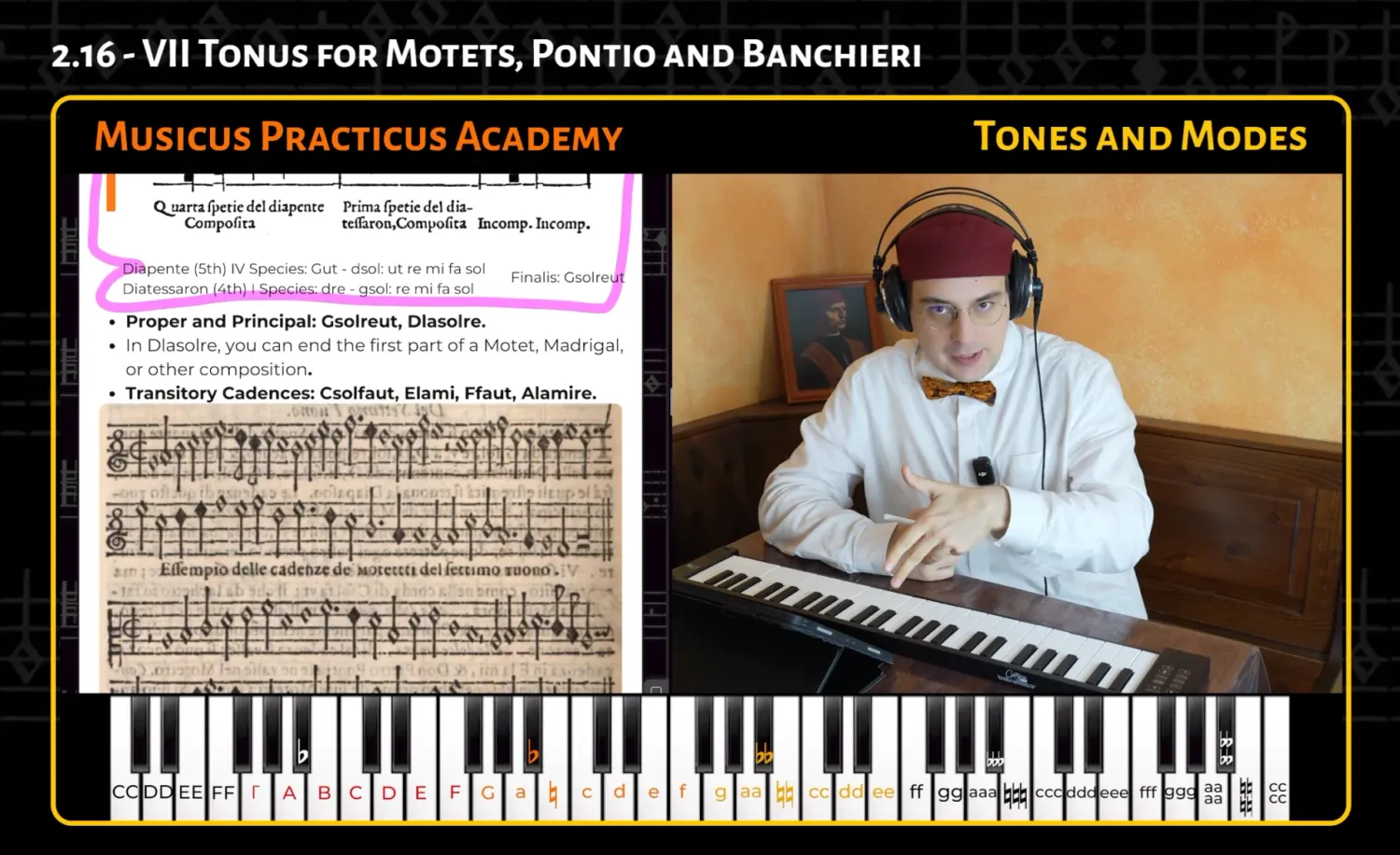
2.16 – VII Tonus for Motets, Pontio and Banchieri
2.17 – VII Tonus for Psalms, Pontio and Palestrina
2.18 – VIII Tonus for Motets, Pontio and Banchieri
2.19 – VIII Tonus for Psalms, Pontio and Palestrina
2.20 – Summary of the Cadences in the 8th Tones
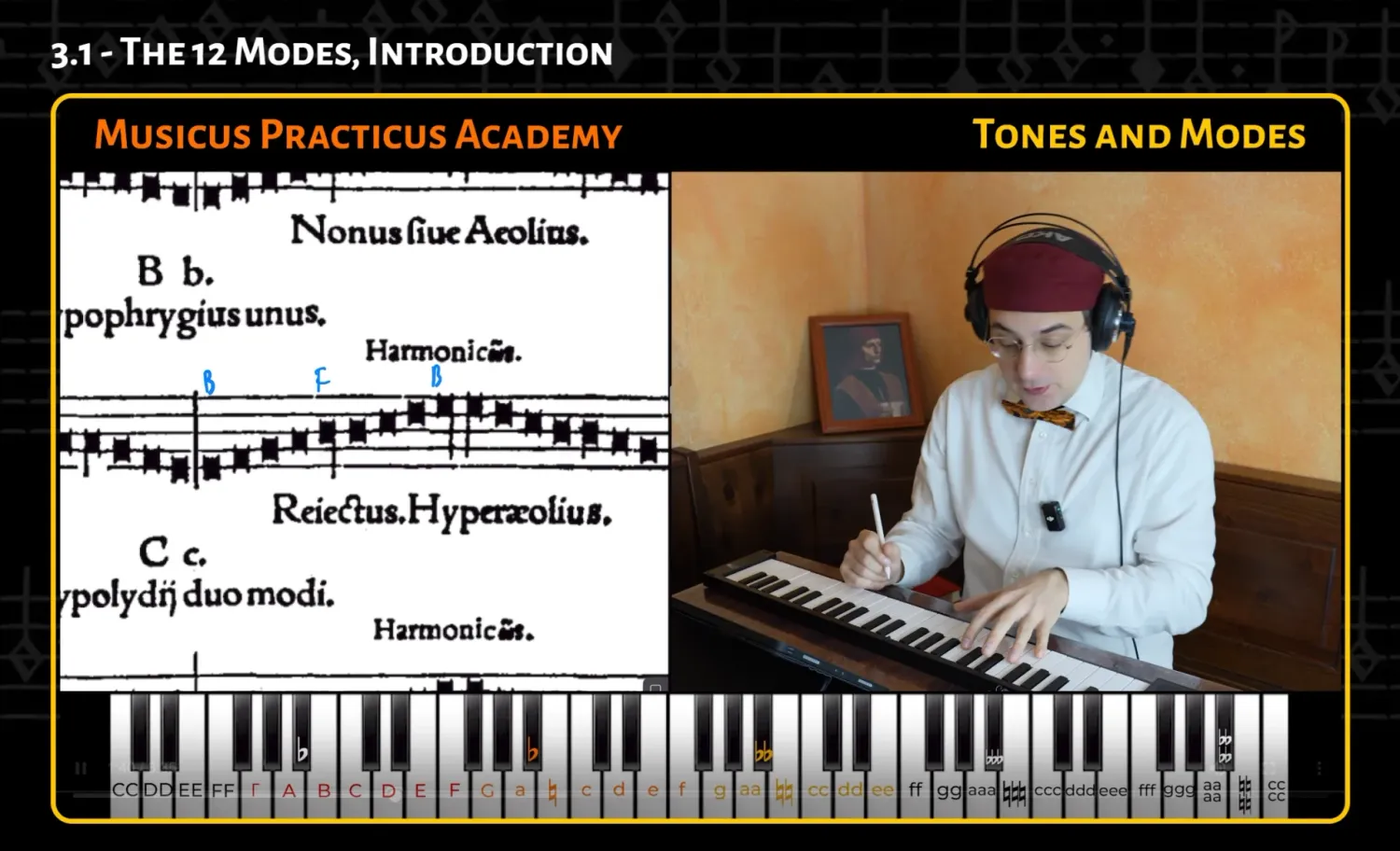
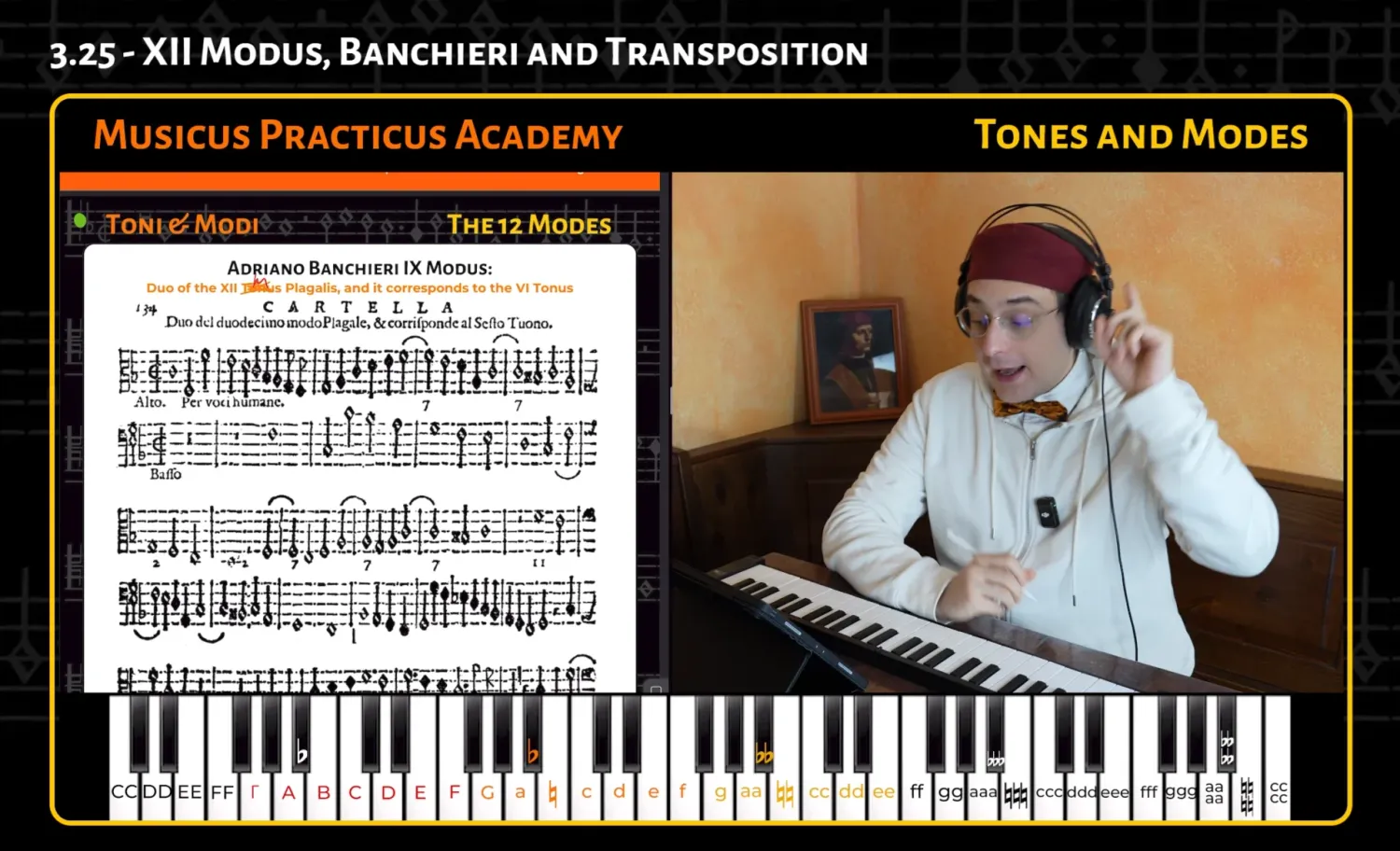
Learn how the 12 Modes of Glareanus are formed.
Learn which Modes correspond to the 8 Ecclesiastical Tones.
Learn how to compose Fugues and imitations in the 12 Modes.
Stages
3.1 – The 12 Modes, Introduction
3.2 – I Modus, Diruta and Zarlino
3.3 – I Modus, Banchieri and Transposition
3.4 – II Modus, Diruta and Zarlino
3.5 – II Modus, Banchieri and Transposition
3.6 – III Modus, Diruta and Zarlino
3.7 – III Modus, Banchieri and Transposition
3.8 – VI Modus, Diruta and Zarlino
3.9 – VI Modus, Banchieri and Transposition
3.10 – V Modus, Diruta and Zarlino
3.11 – V Modus, Banchieri and Transposition
3.12 – VI Modus, Diruta and Zarlino
3.13 – VI Modus, Banchieri and Transposition
3.14 – VII Modus, Diruta and Zarlino
3.15 – VII Modus, Banchieri and Transposition
3.16 – VIII Modus, Diruta and Zarlino
3.17 – VIII Modus, Banchieri and Transposition
3.18 – IX Modus, Diruta and Zarlino
3.19 – IX Modus, Banchieri and Transposition
3.20 – X Modus, Diruta and Zarlino
3.21 – X Modus, Banchieri and Transposition
3.22 – XI Modus, Diruta and Zarlino
3.23 – XI Modus, Banchieri and Transposition
3.24 – XII Modus, Diruta and Zarlino
3.25 – XII Modus, Banchieri and Transposition
3.26 – The 8 Tones withing the 12 Modes
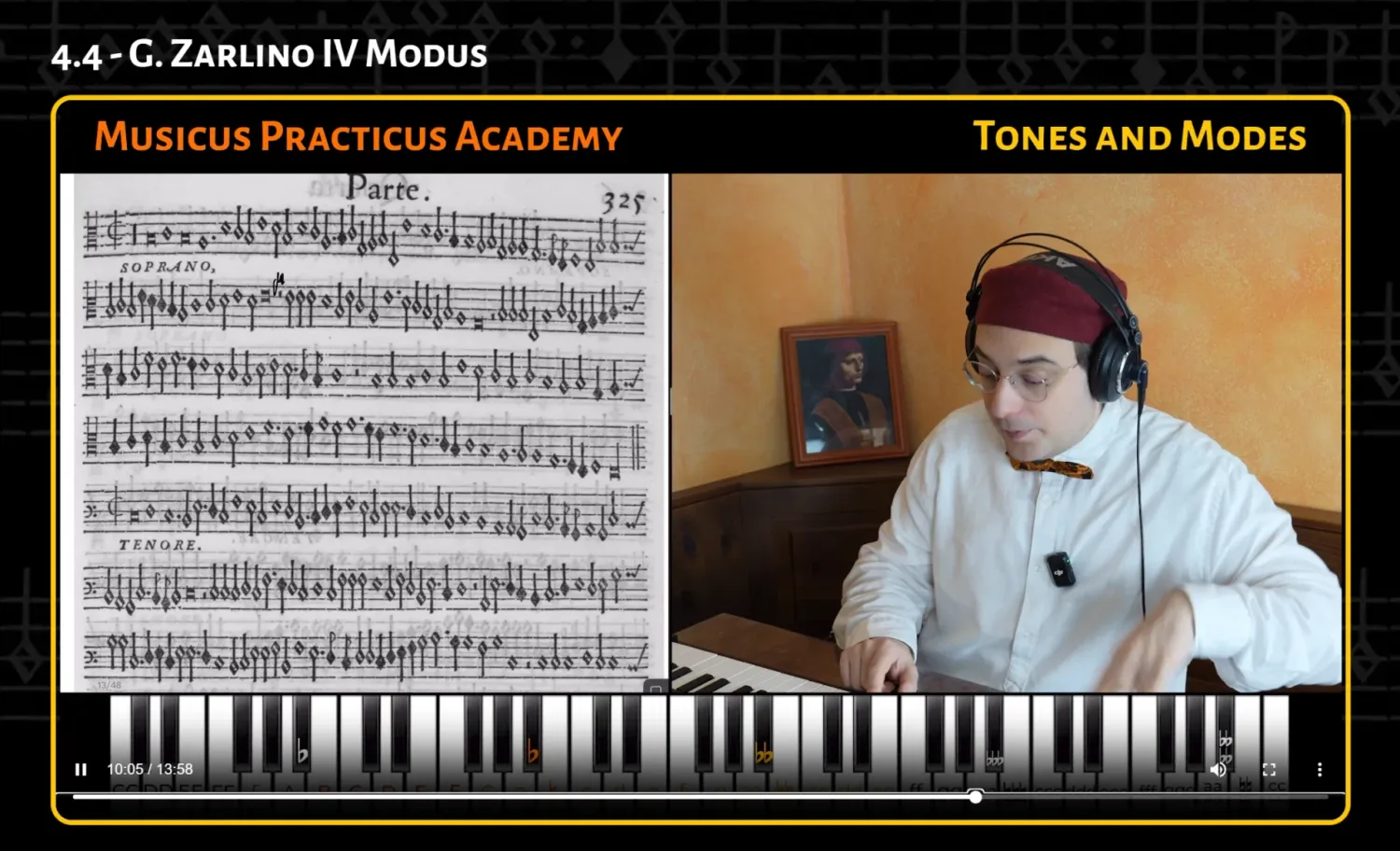
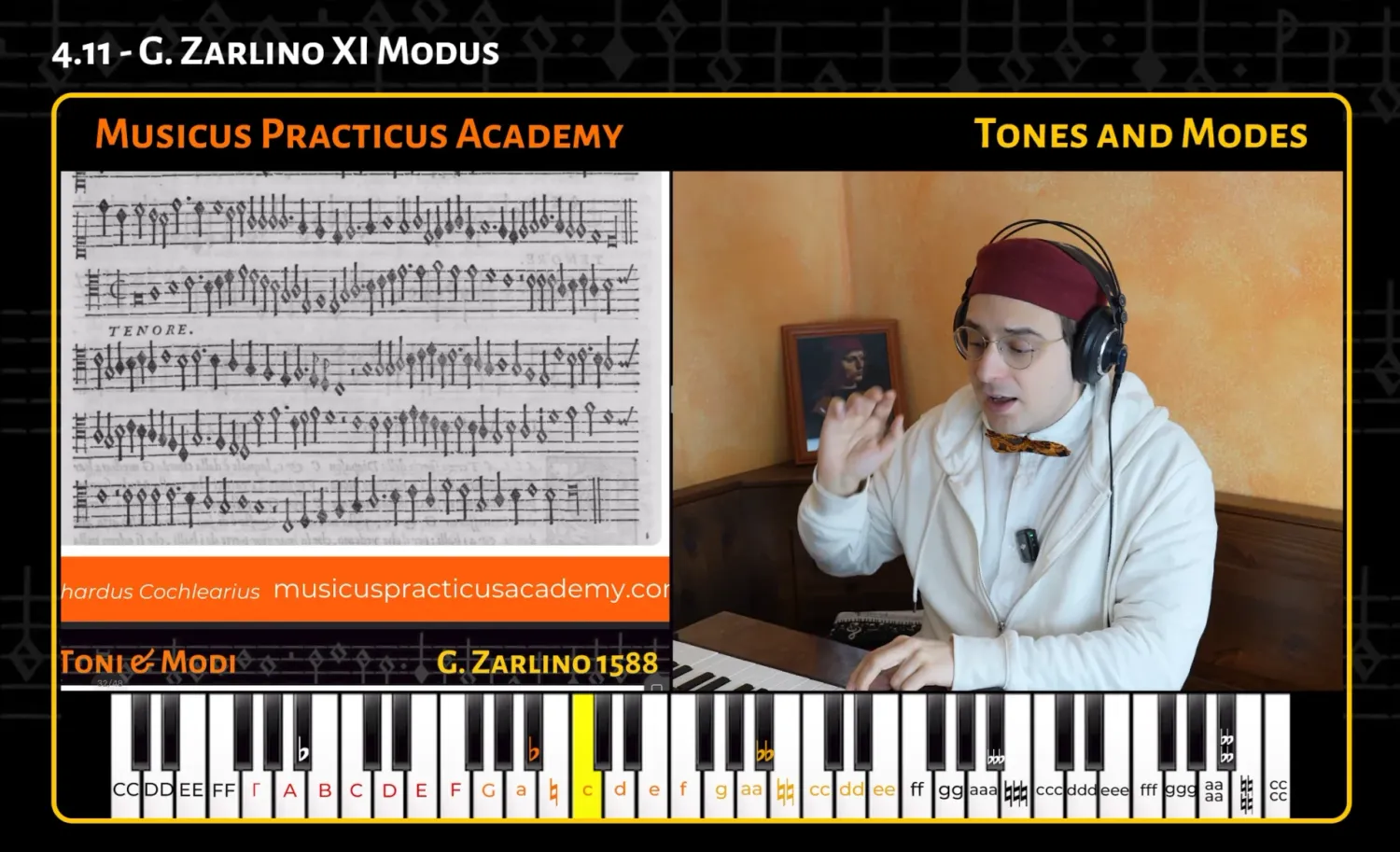
Learn to recognize the 12 Modes through examples from Zarlino.
Discover how to move the voices in accordance with the Tonus or Modus.
Learn the specific characteristics of each Mode, including particular features such as Mixed Modes.
Stages
4.1 – G. Zarlino I Modus
4.2 – G. Zarlino II Modus
4.3 – G. Zarlino III Modus
4.4 – G. Zarlino IV Modus
4.5 – G. Zarlino V Modus
4.6 – G. Zarlino VI Modus
4.7 – G. Zarlino VII Modus
4.8 – G. Zarlino VIII Modus
4.9 – G. Zarlino IX Modus
4.10 – G. Zarlino I Modus
4.11 – G. Zarlino XI Modus
4.12 – G. Zarlino XII Modus
4.13 – Modes in Compositions
4.14 – How to Arrange the Parts
Learn the principles of composing Fugues in the 12 Modes.
Analyse Fugues and learn how to move the voices in accordance with the Mode.
Discover how the Diapente or Diatessaron can give a Fugue an Authentic or Plagal character.
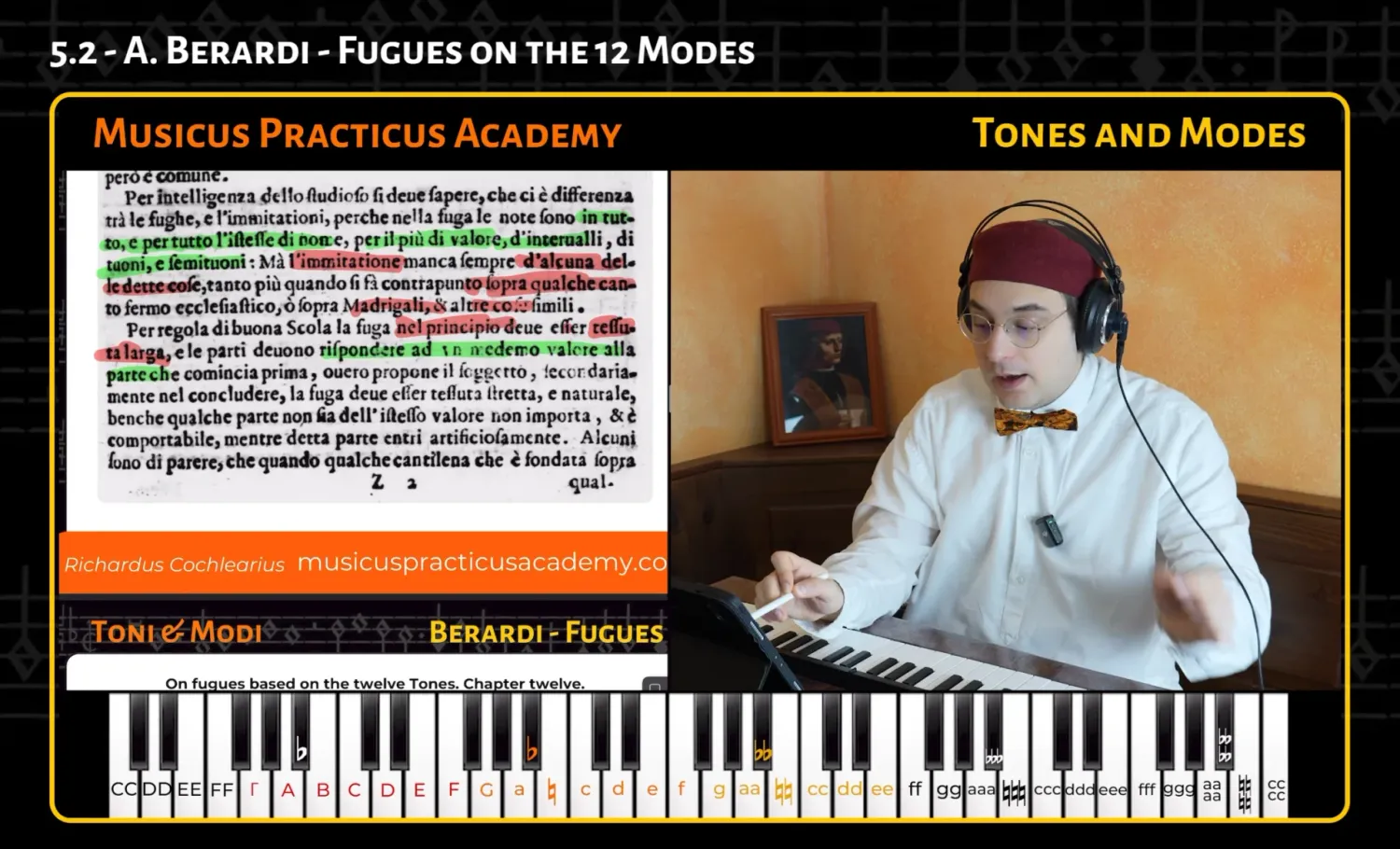
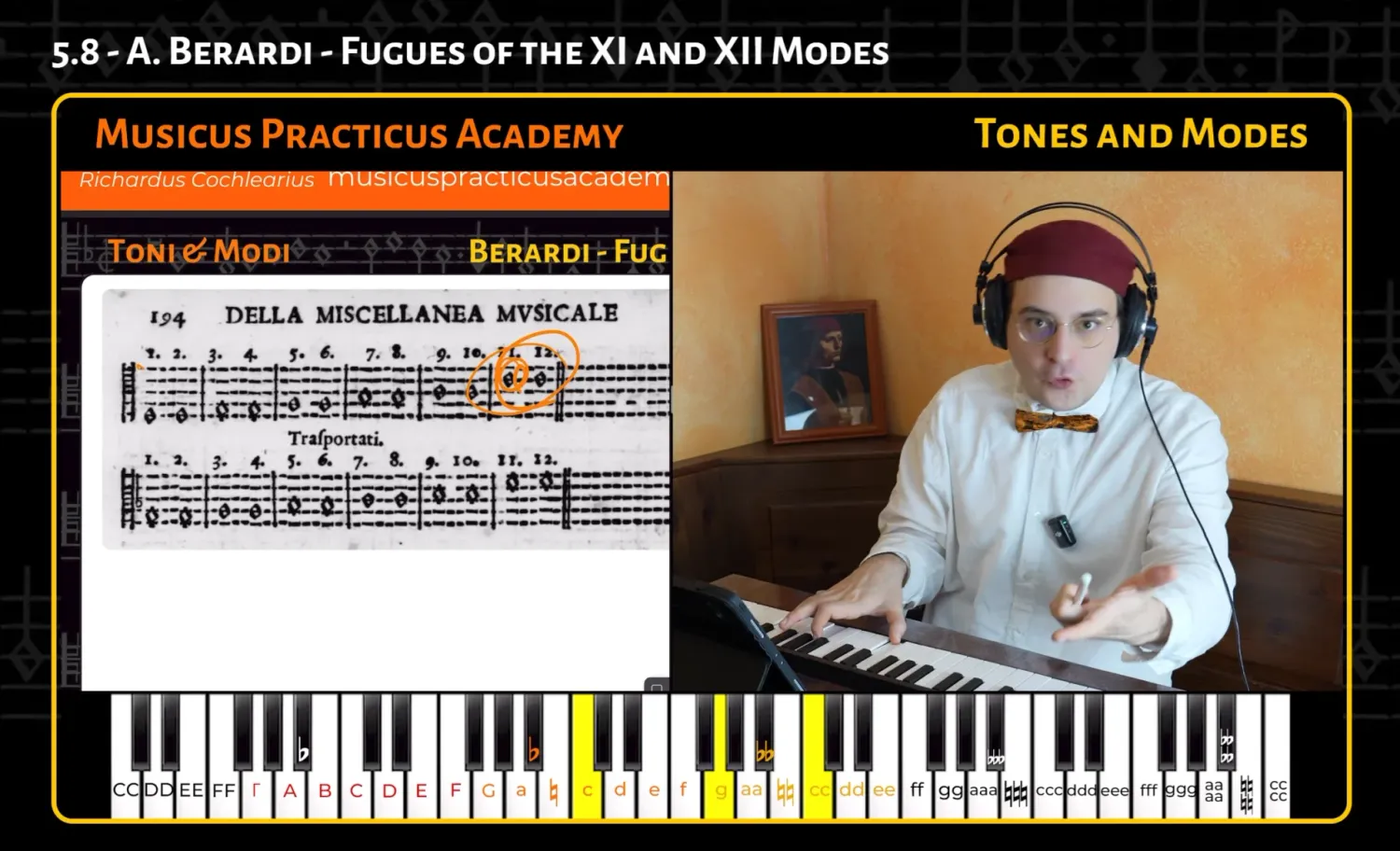
Stages
5.1 – A. Berardi – How to Classify the 12 Modes
5.2 – A. Berardi – Fugues on the 12 Modes
5.3 – A. Berardi – Fugues of the I and II Modus
5.4 – A. Berardi – Fugues of the III and IV Modus
5.5 – A. Berardi – Fugues of the V and VI Modus
5.6 – A. Berardi – Fugues of the VII and VIII Modes
5.7 – A. Berardi – Fugues of the IX and X Modes
5.8 – A. Berardi – Fugues of the XI and XII Modes
5.9 – A. Berardi – Tablature of the 12 Fugues
Discover how to transpose the 12 Modes beyond the Chorde Naturali according to the Voce Chorista.
Practise all 12 Modes in the Chorde Naturali.
Learn how to transpose all 12 Modes correctly while preserving the species of Diapente and Diatessaron.
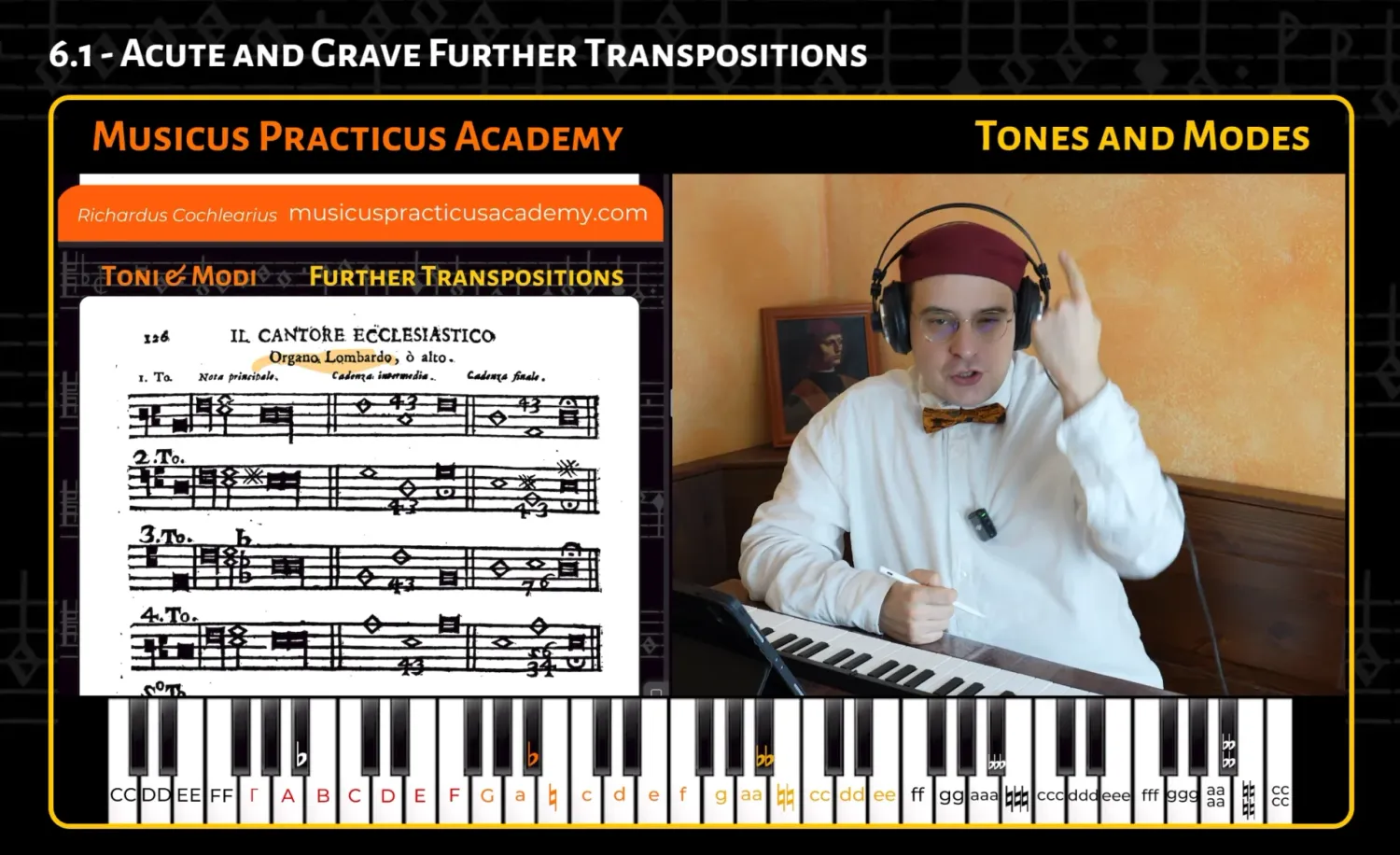
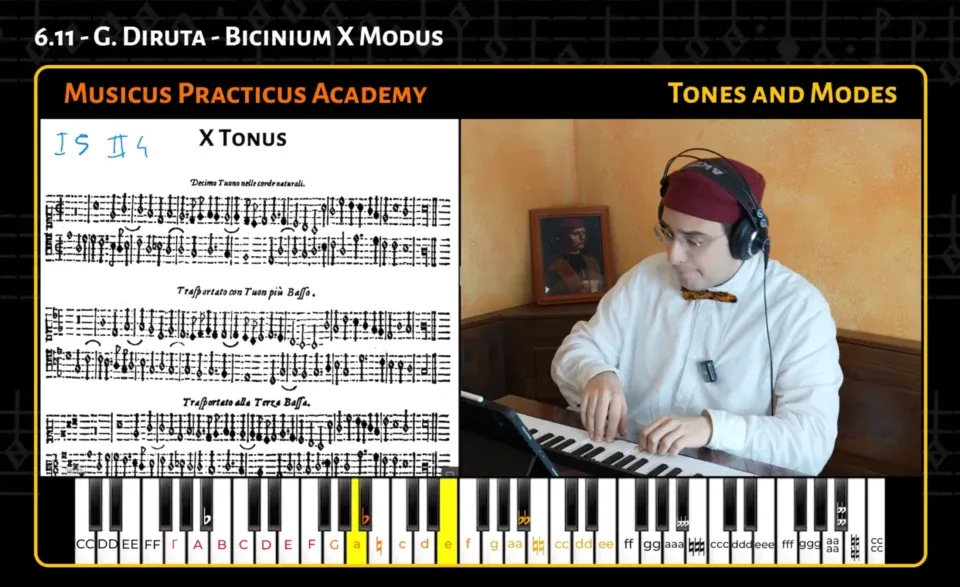
Stages
6.1 – Acute and Grave Further Transpositions
6.2 – G. Diruta – Bicinium I Modus
6.3 – G. Diruta – Bicinium II Modus
6.4 – G. Diruta – Bicinium III Modus
6.5 – G. Diruta – Bicinium IV Modus
6.6 – G. Diruta – Bicinium V Modus
6.7 – G. Diruta – Bicinium VI Modus
6.8 – G. Diruta – Bicinium VII Modus
6.9 – G. Diruta – Bicinium VIII Modus
6.10 – G. Diruta – Bicinium IX Modus
6.11 – G. Diruta – Bicinium X Modus
6.12 – G. Diruta – Bicinium XI Modus
6.13 – G. Diruta – Bicinium XII Modus
6.14 – Modulations of the Tones
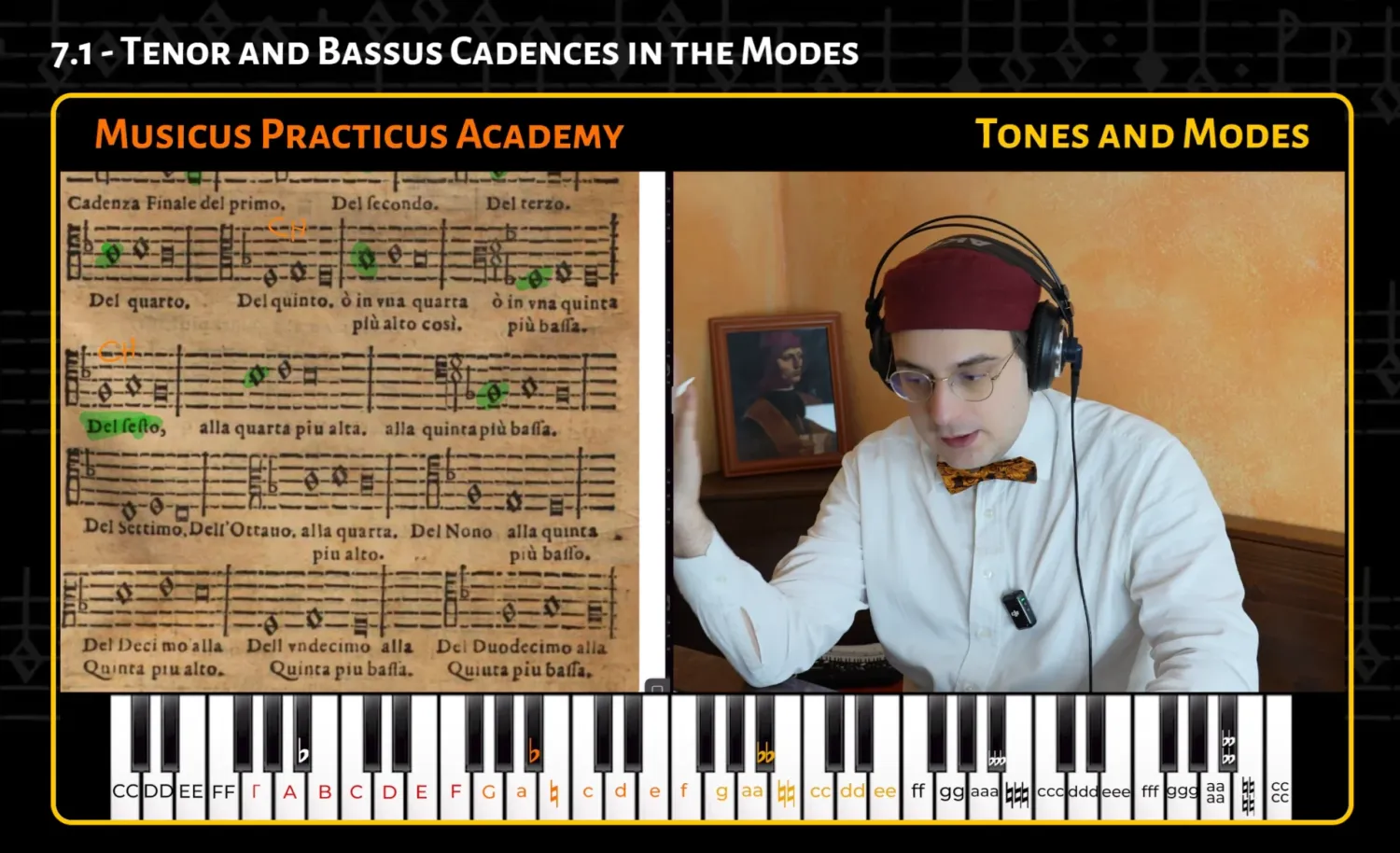
Learn to recognise the Mode or Tone of a Motet from the Cadences of the Tenor and Bassus.
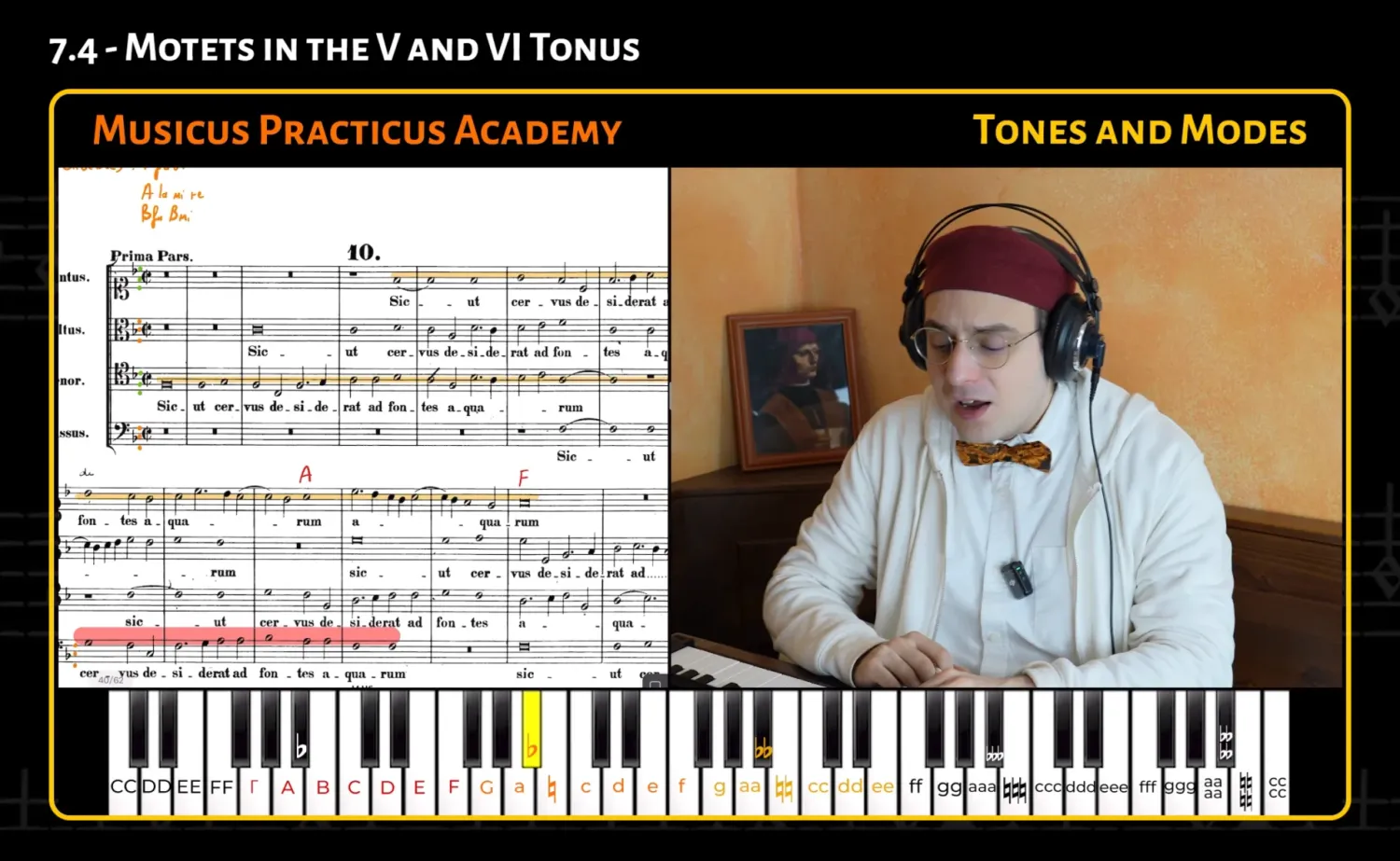
Learn to identify the Tone of a four-voice Motet through its Cadences and other musical elements.
Learn to recognise the ambitus and the Tenor in Authentic Motets and distinguish them from Plagal ones.
Stages
7.1 – Tenor and Bassus Cadences in the Modes
7.2 – Motets in the I and II Tonus
7.3 – Motets in the III and IV Tonus
7.4 – Motets in the V and VI Tonus
7.5 – Motets in the VII and VIII Tonus
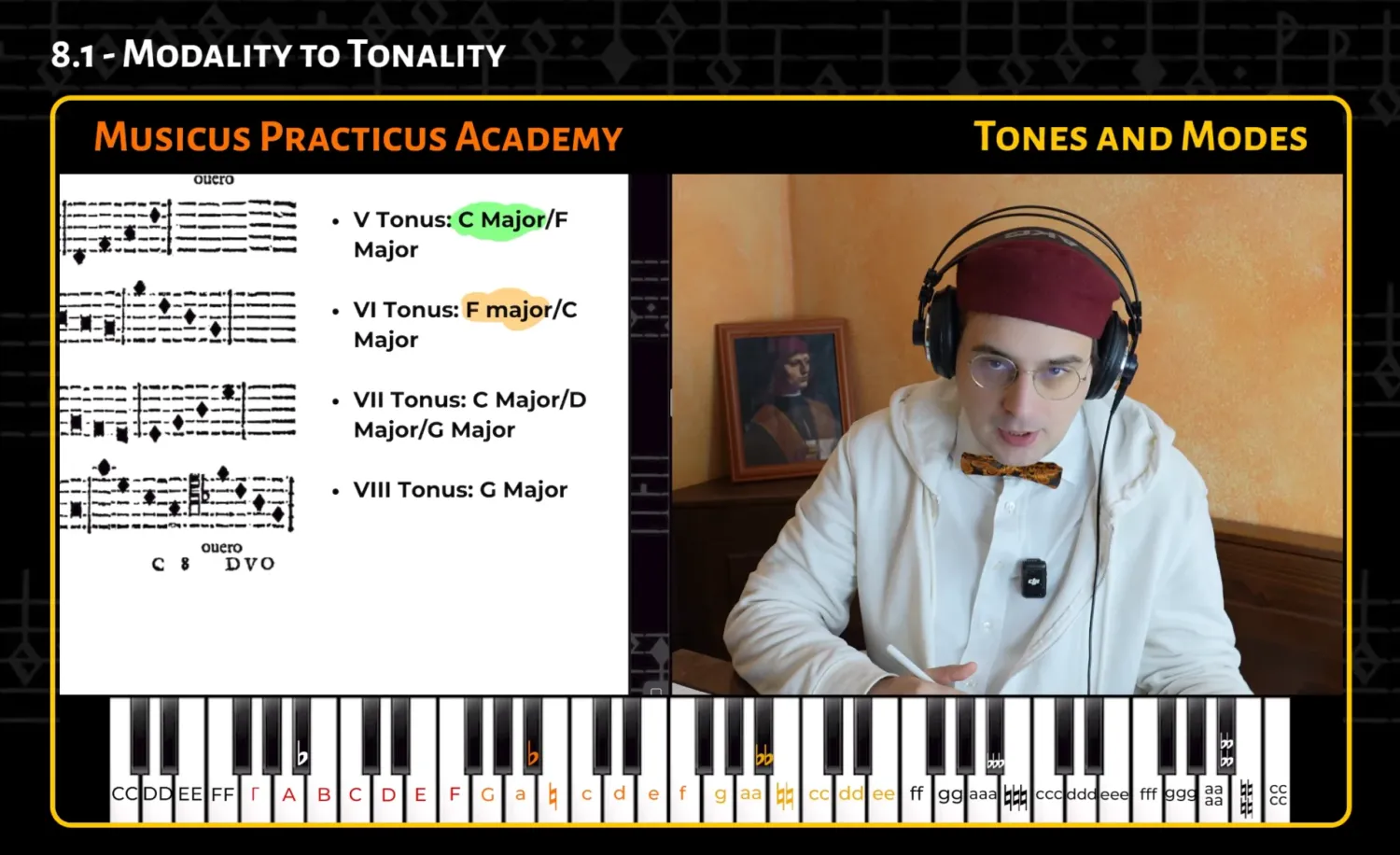
Discover how each of the 8 Ecclesiastical Tones evolved into one or more distinct Keys.
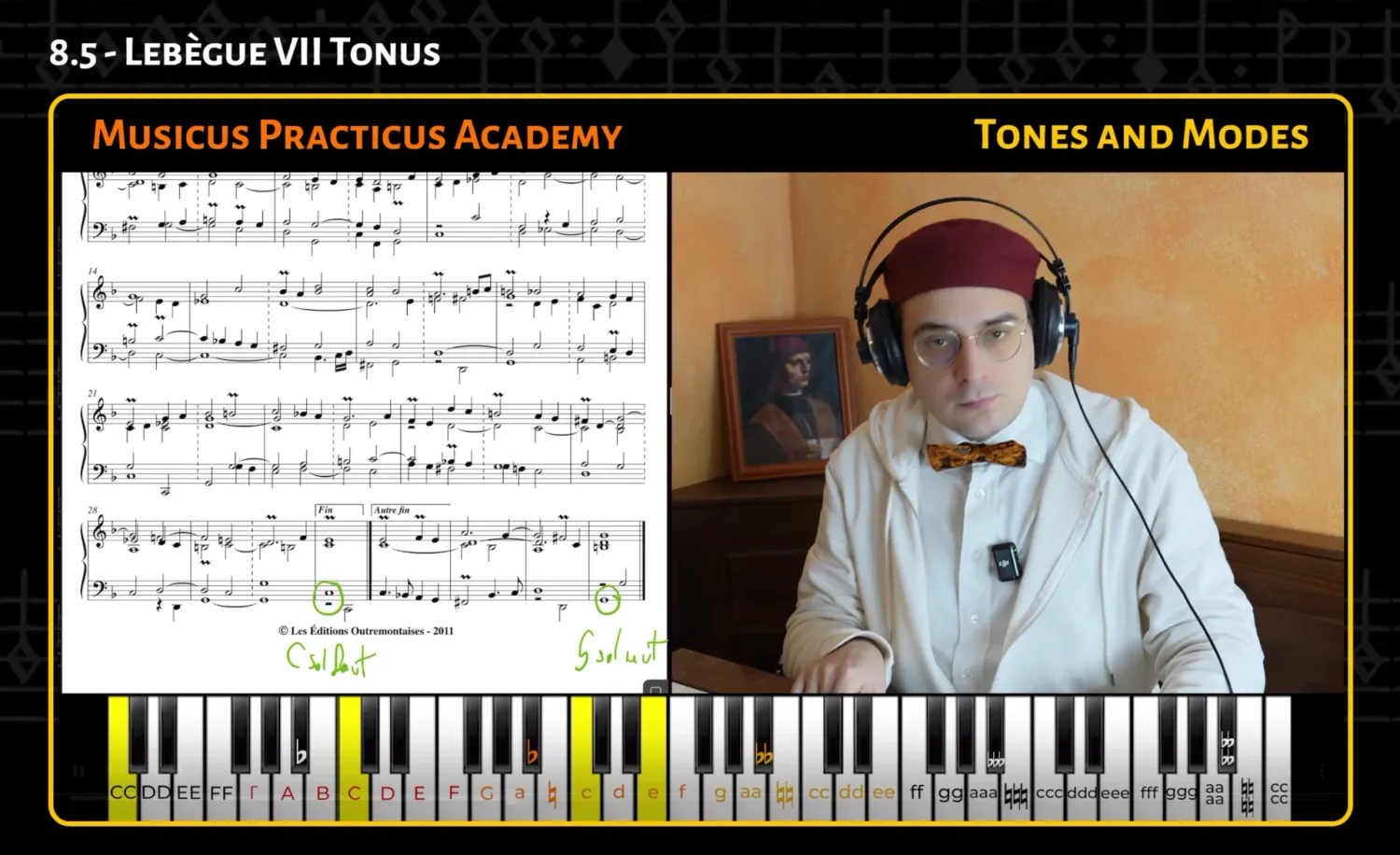
Learn how to correctly relate compositions written in the 8 Tones of Cantus Firmus and Cantus Figuratus to the tonal system.
Explore the unique peculiarities of each Tone, such as why the IV Tonus can begin on A and end on E.
Stages
8.1 – Modality to Tonality
8.2 – Lebègue I and II Tonus
8.3 – Lebègue III and IV Tonus
8.4 – Lebègue V and VI Tonus
8.5 – Lebègue VII Tonus
8.6 – Lebègue VIII Tonus
8.7 – Nôtre I and II Tonus
8.8 – Nôtre III and IV Tonus
8.9 – Nôtre V and VI Tonus
8.10 – Nôtre VII and VIII Tonus
103 Lessons
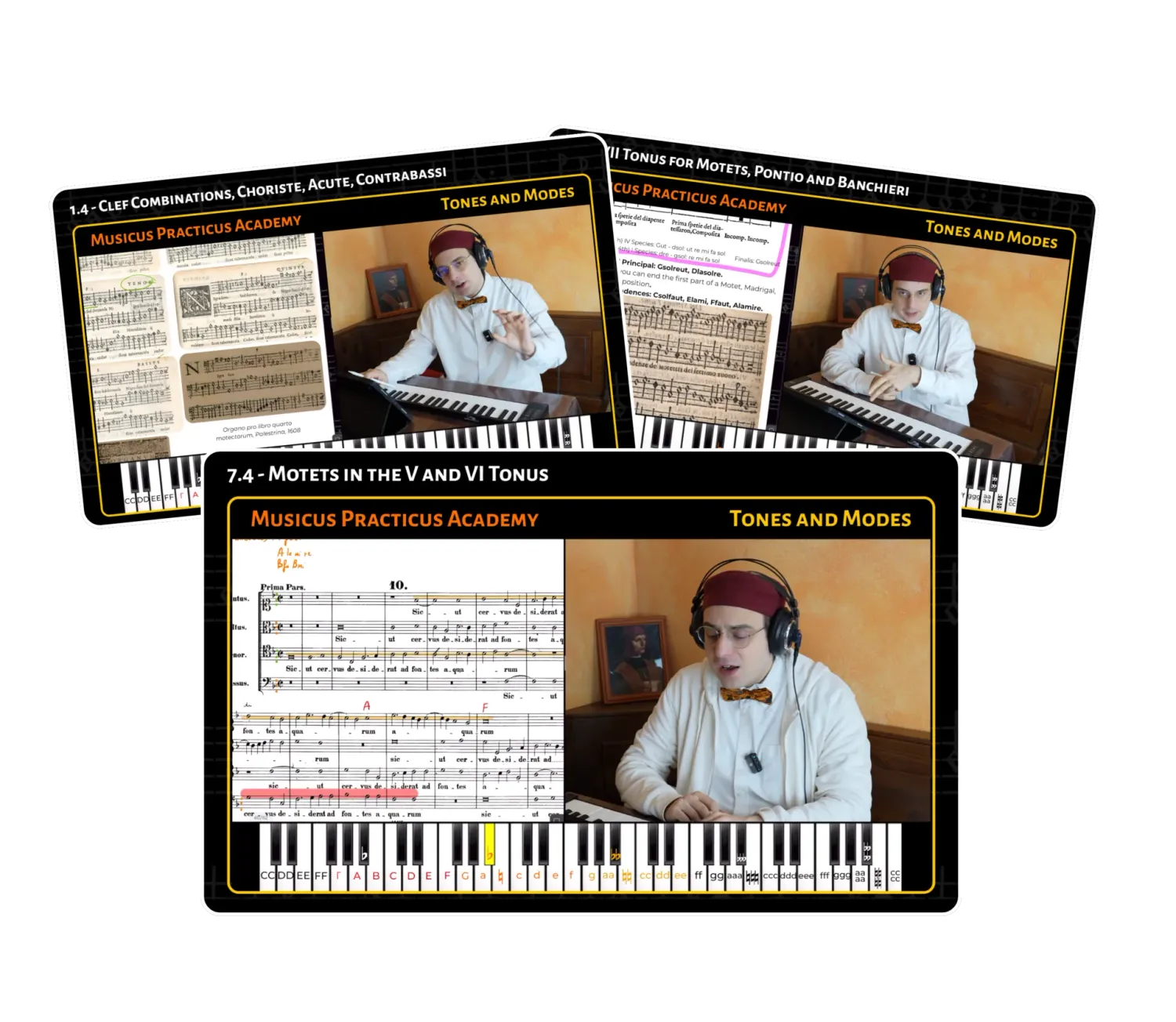
103 Stages and Video Lessons that you can watch and study anytime you want, from the online platform.
450 Pages
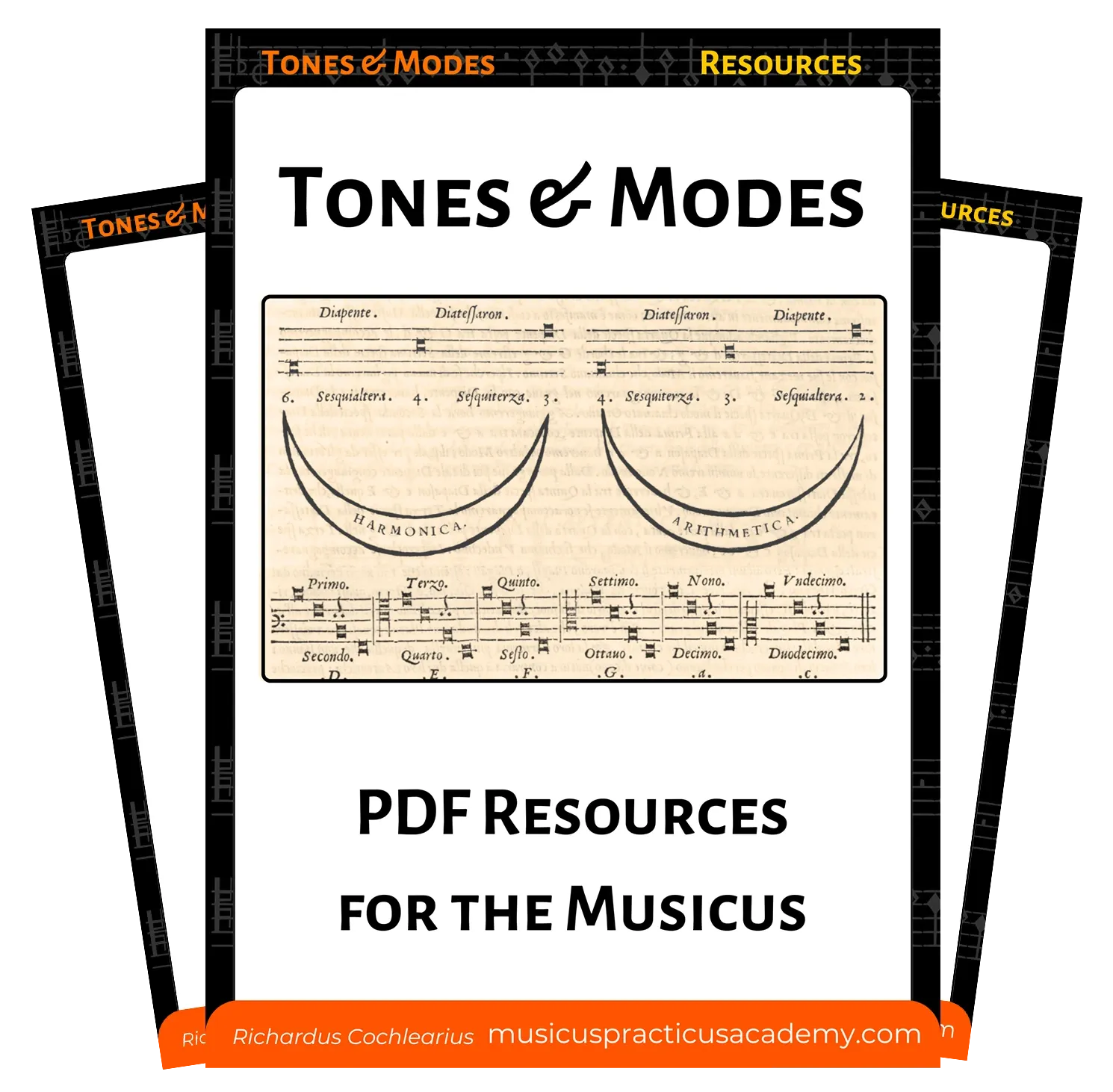
450 PDF pages of examples
exercises, and resources to follow the lessons, take notes, and do plenty of practice.
Questions

Comment under each stage to ask your questions and satisfy your curiosity as a Musicus Practicus.
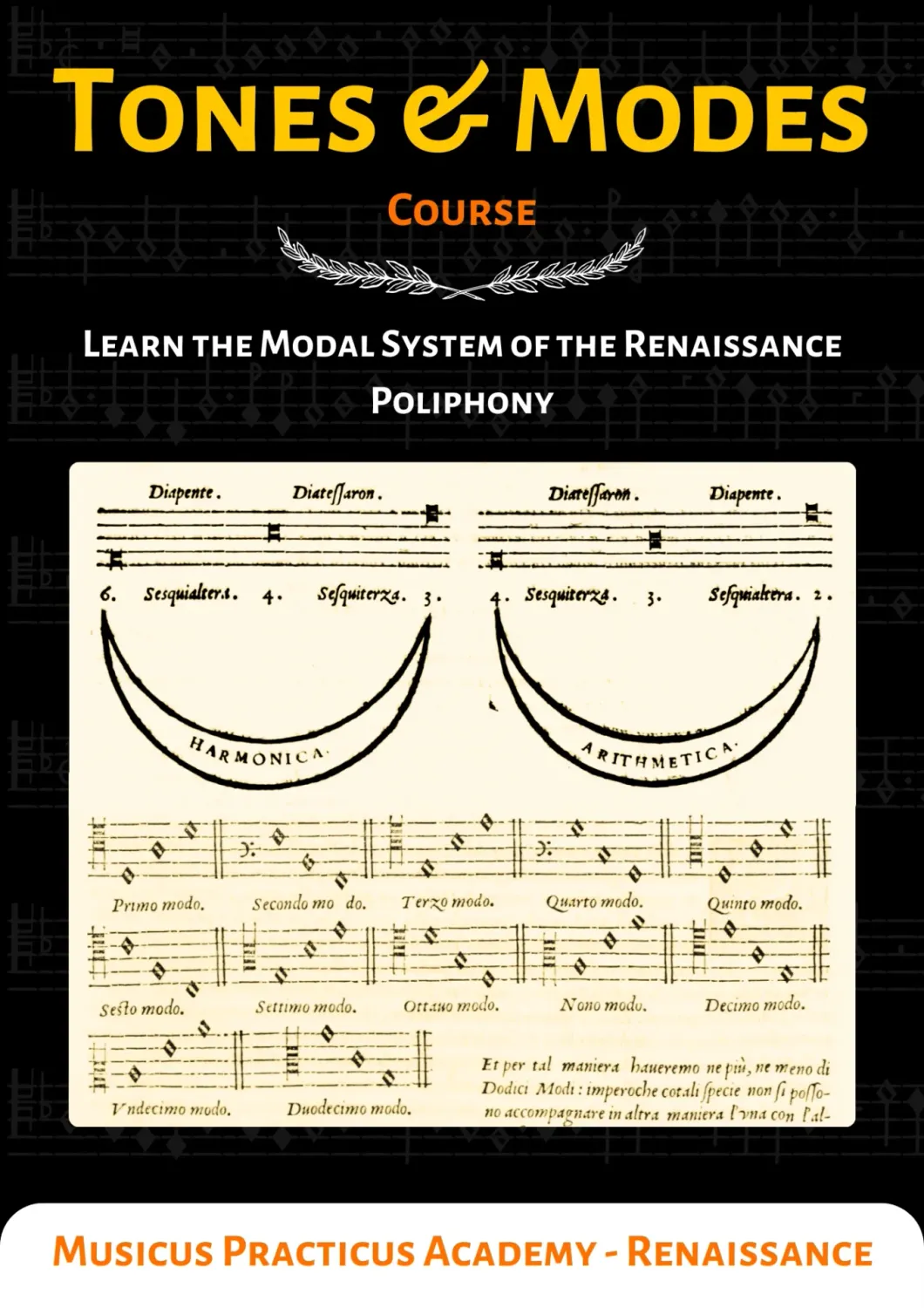
Learn More about Tones and Modes!
Discover everything you will learn and preview some images we’ll use to learn together!